The mountains that surround Thimphu, Bhutan’s capital, are host almost no signs of human interference. The only objects that sparsely occupy the mountainside are colourful prayer flags, the odd monastery buried deep underneath a rocky overhang, and bunches of looming white flags, which resemble dead trees or the sails of abandoned fleets. It is these white flags, and what they tell us about the very interesting world-view which is held here in Bhutan, that I will be writing about today.
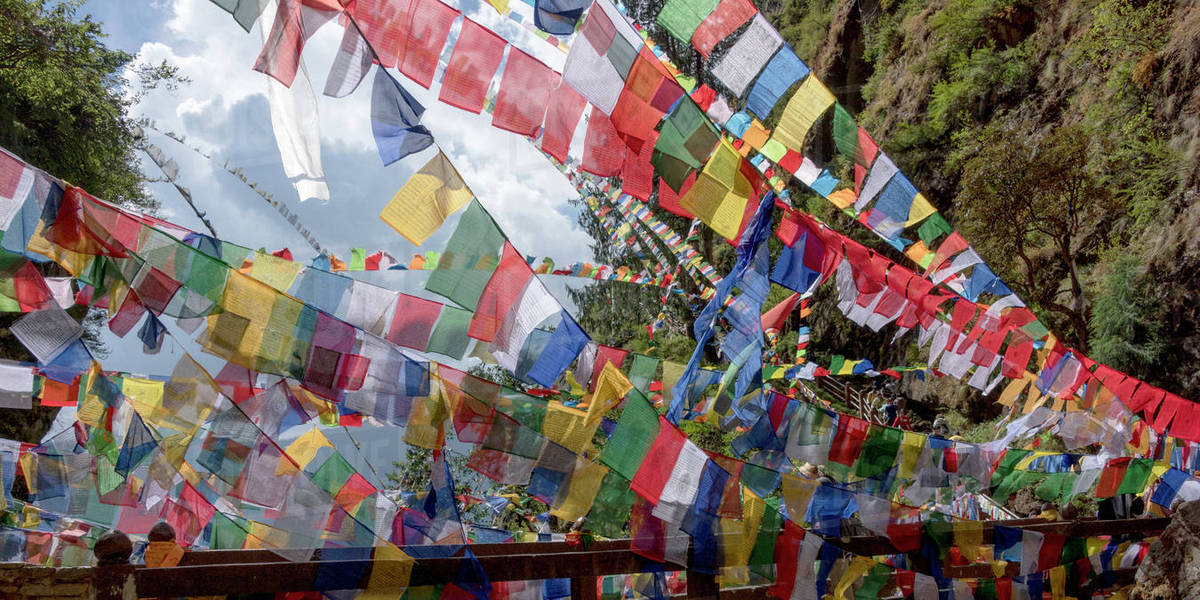
First a bit about prayer flags. All over Bhutan, from inner-city Thimphu to the most remote corners of the alpine jungle, long lines of coloured flags are flown. The reason for hanging these flags originates from the merit gained from reproducing sacred Buddhist text. The flags are flown in order to disseminate short sutras (prayers) via the Himalayan winds to all sentient beings this wind may pass on its way down the mountain. On bridges, prayer flags (especially the green ones which are water prayers) hang to protect the structure against the water and ensure safe passage for those using it.
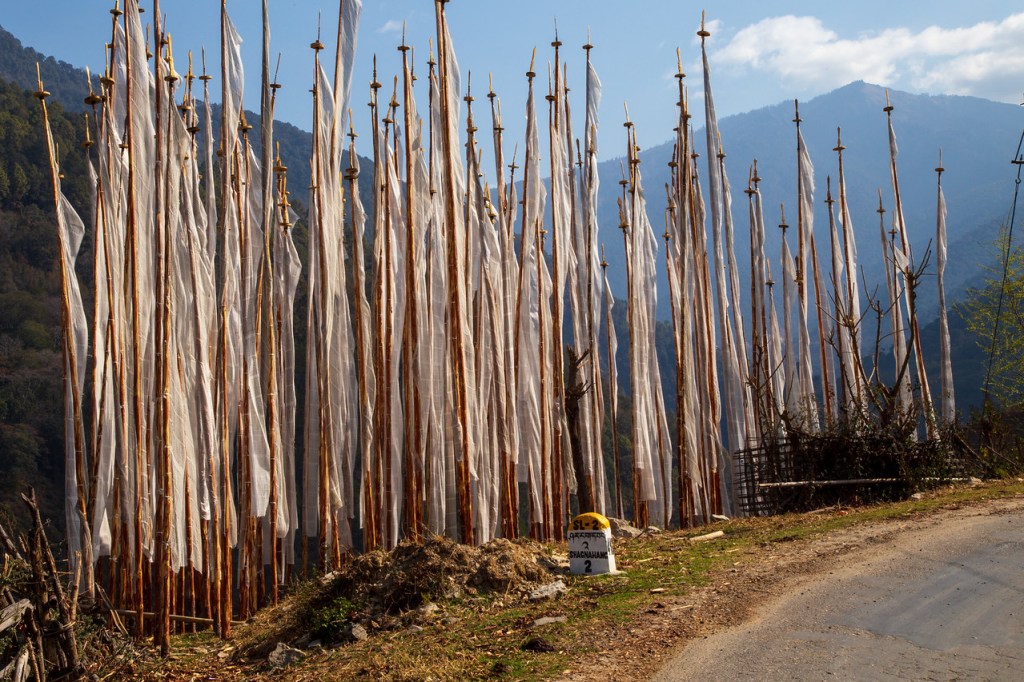
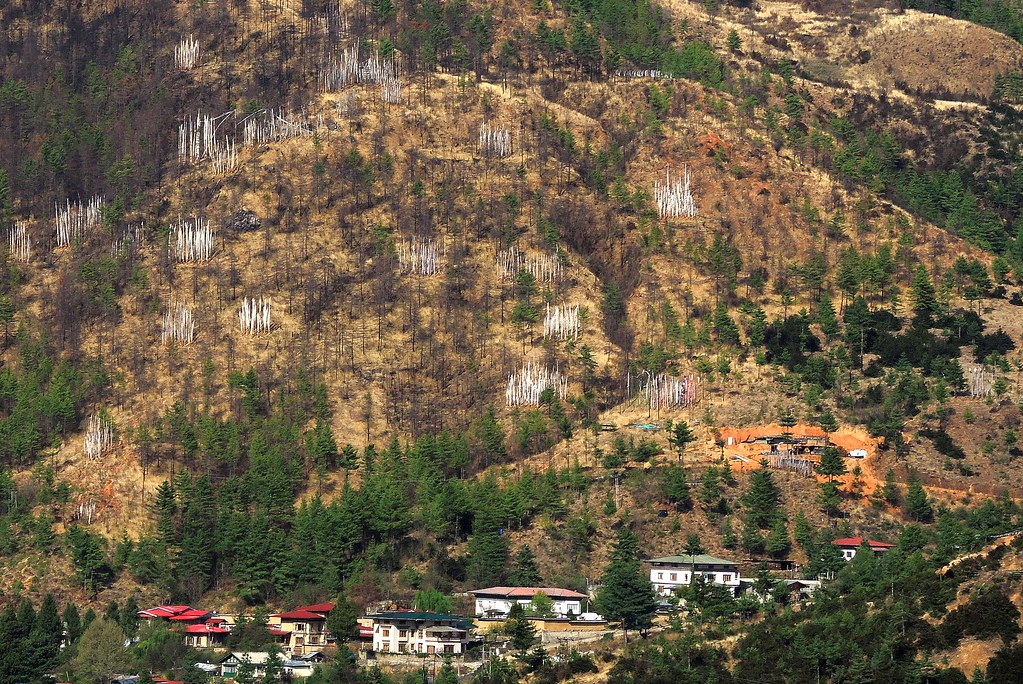
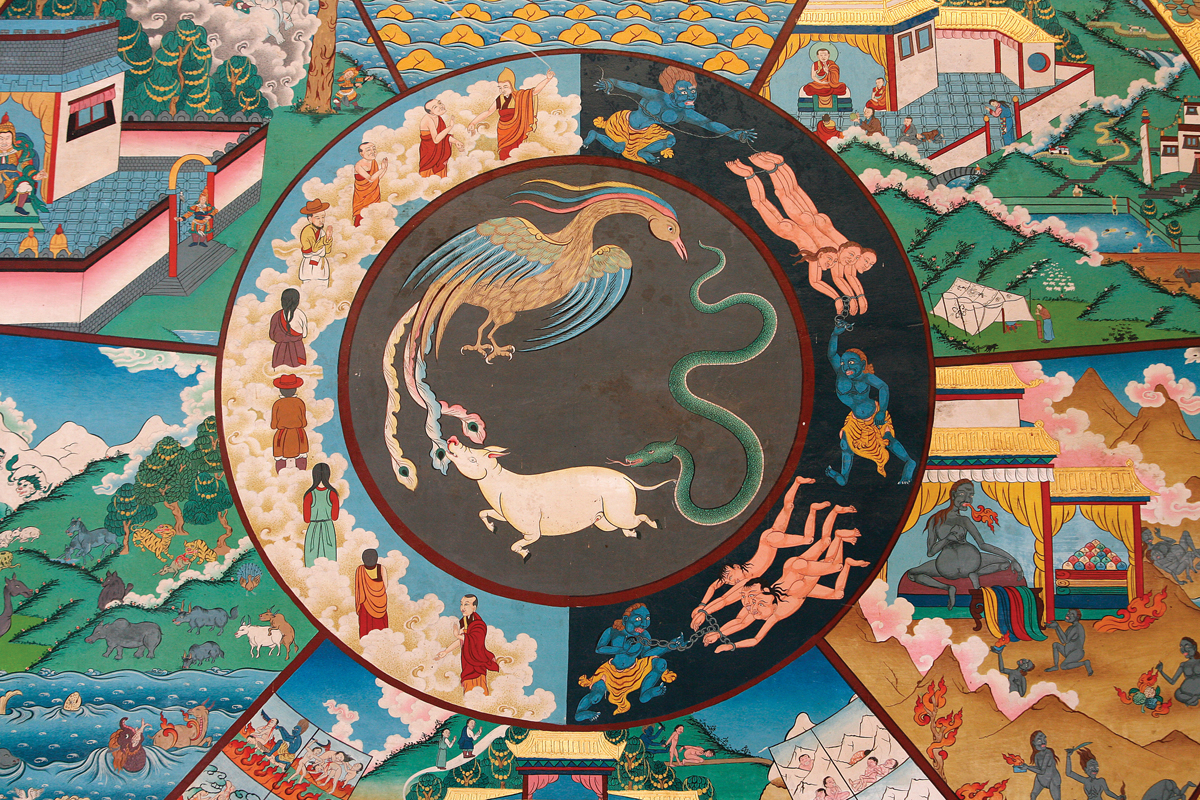
The tall, white flags I told you about earlier are a particular type of prayer flag used to send out prayers of guidance to the deceased. “These prayers”, my roommate Thinley says, “are used to guide the deceased in the 49 days of limbo, where they await judgement. If one’s consciousness is drawn towards sleeping in this life, then they will be reincarnated as a pig. If one’s consciousness is drawn towards aggression and short temperedness, then they will be reincarnated as a snake. For those who fully understand themselves, know who they are, they will be reincarnated as a human. There are six realms one can be reincarnated into within these 49 days: three good (gods, demigods, and humans) and three bad (animal, hungry ghosts, and hell). The realms of god and demigods are reserved for people who those who have accumulated merit (karma) in their lives.” I ask, “Where would Gandhi rank in these realms?” “Gandhi would be outside of these realms along with Buddha and chose to return to the cycle of rebirth (samsara) and the world of suffering (dukkha) to guide people and teach the cosmic law and order (dharma).”
After some more conversation about death and rebirth I noted down just one more thing Thinley says. This is Buddhist concept of Choe. Choe (pronounced “Chö” for my scandi friends) means the truth of the alignments natural worlds in Dzongkha (the Bhutanese language). When your inner world is aligned with your outside world: that is when you achieve happiness.
These flags, although noticeable, are part of a landscape, made of material that will sooner rather than later degrade and become part of the earth that lies beneath them. Gravestones on the other hand occupy an often walled off space of land and are made to exist for many hundreds of years after the deceased has become part of the soil and worms. To me these are two very different traditions, especially when we think about permanence and sustainability.

Impermanence is a very important concept in Buddhism. Back to Thinley for more definitions from a Buddhist mind. “Impermanence means that everything is temporary, all things that are constructed by the human mind — from radiators to emotions — are impermanent. And for this reason, we should not feel attachment to material things and especially emotions. This attachment to emotions is a major cause of suffering in the world.”
Sustainability-wise this idea of permanent humans existing outside of an impermanent nature fails, I believe, to correctly describe how humans fit into natural systems. The very thought that we exist outside of natural rhythms is directly counter-sustainability and can be considered an underlying cause of the mass losses in biodiversity and climate catastrophe we see today. It is a central Buddhist notion that, as Thinley said, we suffer because we do not see the world in the correct way: we cling onto that feeling of jealousy of your friend who earns more money than you — we do not fully grasp the concept of Choe. This idea of humans living about or outside of nature is an example of this incorrect view of the world around us which gives rise to suffering through the 60% losses in animal populations since the 70s, the same decade Flo Rida and Kourtney Kardashian were born in.

The Buddhist thought that we live within earth’s cycles is perhaps best exemplified by how cremation ashes are traditionally treated in Bhutanese Buddhist practice. 108 Tsa Tsas (pictured), or small Stupas, are fashioned out of a blend of cremation ashes and clay from the earth. These are tucked away in cracks and nooks in the mountainside or sites of religious importance. What’s interesting here is one, that what remains of this human body is now mixed with what is no more than earth to become one in the Tsa Tsa. Two, as the Tsa Tsas are exposed to the elements they begin to degrade and sink into the earth that they stand upon to contribute once again to earth’s cycles. This ingrained belief of human-nature interconnectivity that exists here in Bhutan should stand as a great source of inspiration when it comes to how we in the west view our position in the cosmos.
Just on a final note: I am not trying to take anything away from Christian memorialisation. The religious practice remains just as meaningful, but it is the nature of permanence and worldview that I have tried to address.
On one more final note: I’d like to thank my roommate Thinley (or Chocolate as he sometimes goes by) for the informative, introspective conversations. I will be using Chocolate as reference for reflection on points that I have, or think I have, about the Buddhist mindset in the future. Hopefully I can make you feel a part of the hugely interesting conversations we have. Next up, something about a bike ride, bhutanese mythical fauna or Buddhism 101 and look out for regular updates on pictures with enlightening captions.
 Oscar's Bhutan